
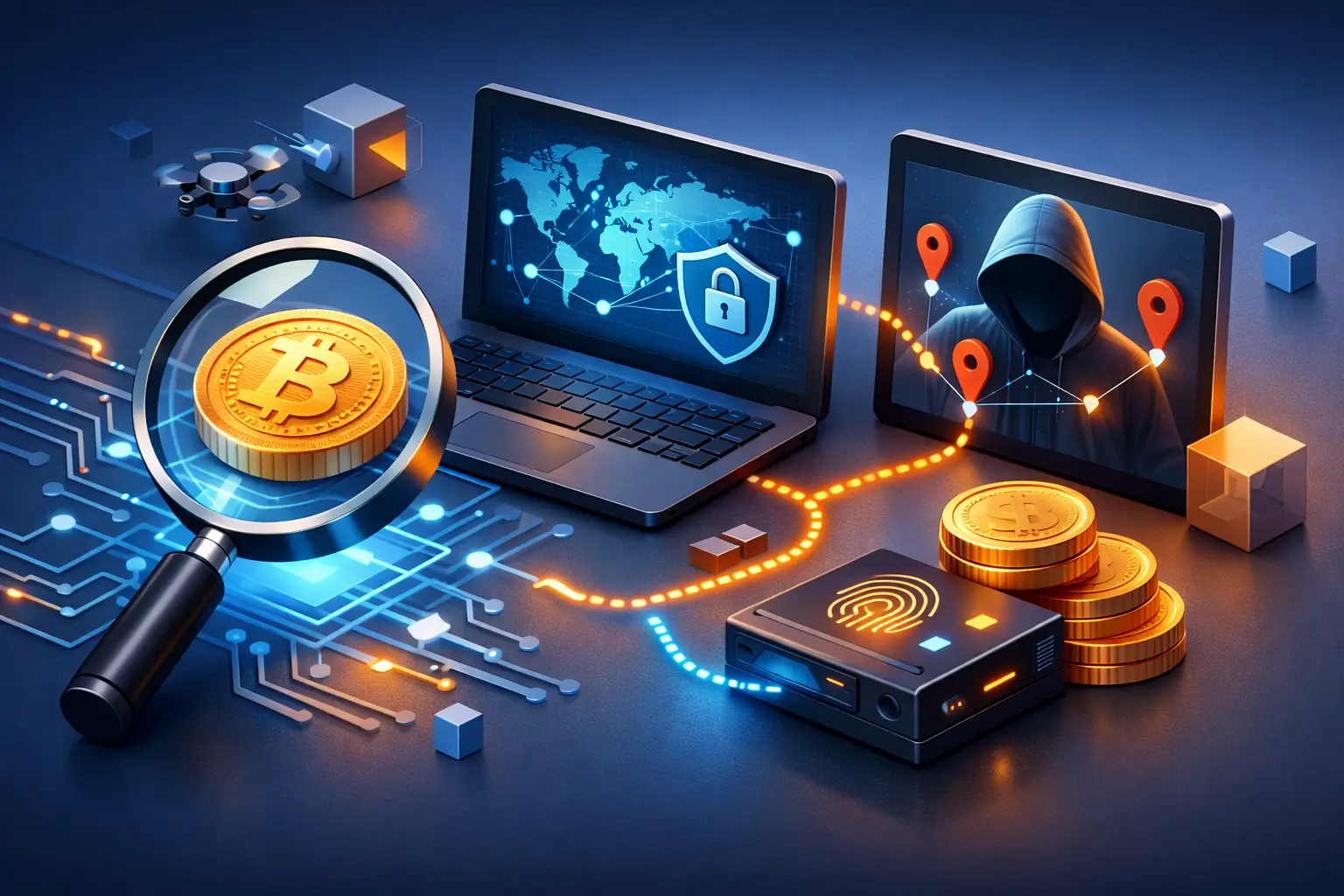
A stolen wallet can move funds across multiple addresses within minutes, often through swaps, bridges, mixers, or centralized exchanges. Knowing how to trace stolen cryptocurrency starts with preserving the evidence you already have, not attempting to chase the thief through unfamiliar tools or sending more funds to anyone claiming they can "unlock" a recovery.
Blockchain transactions are generally visible, but visibility is not the same as identification or recovery. A wallet address may be traceable across a public ledger, yet connecting that address to a person, exchange account, or legal entity requires structured analysis, reliable attribution, and the correct reporting route.
What a Cryptocurrency Trace Can Actually Establish
A professional trace reconstructs the movement of assets from a known source, such as your wallet, exchange withdrawal, or scam deposit address. Investigators map transaction hashes, wallet clusters, token swaps, bridge transfers, and transfers to services that may hold customer identification information.
The immediate objective is usually to answer several practical questions: Where did the assets go? Are they still on-chain? Did they reach a centralized exchange or other regulated service? Can the movement be documented in a form that law enforcement, counsel, compliance teams, or an exchange can review?
A trace does not create a technical right to reverse a transaction. Most blockchain transfers are irreversible by design. Recovery depends on the facts of the case, the speed of action, the destination of the funds, the policies of involved platforms, and the availability of legal or law-enforcement intervention. Anyone who guarantees recovery before reviewing the evidence is not describing a credible forensic process.
First Actions After a Theft or Scam
The first hours matter. Do not delete chats, emails, browser history, wallet notifications, or transaction records because they feel embarrassing or overwhelming. Those materials may establish how the fraud occurred and connect the on-chain movement to the people or websites involved.
If a wallet may still be compromised, move remaining assets only after confirming the safest method. For a self-custody wallet, this may mean creating a new wallet from a clean device and transferring any unaffected assets. If an exchange account was compromised, immediately change credentials, enable strong multi-factor authentication, end active sessions, and contact the exchange's security team through its official channel.
Preserve the following information in its original form:
- Transaction hashes, wallet addresses, network names, token types, dates, times, and amounts
- Screenshots of the wallet, exchange account, scam website, advertisements, and payment instructions
- Messages, email headers, phone numbers, social-media profiles, and usernames used by the suspect
- Bank transfer records, card receipts, wire confirmations, and records of fiat-to-crypto purchases
- A written timeline explaining what happened, including each transfer and any contact with the fraudster
Avoid interacting further with the suspect unless law enforcement or legal counsel specifically advises it. Fraudsters frequently use continued contact to obtain more personal information, pressure victims into paying additional fees, or create confusion about the transaction trail.
How to Trace Stolen Cryptocurrency Step by Step
A defensible trace begins with a verified starting point. That is usually the victim's sending wallet or exchange withdrawal transaction, rather than an address supplied later by the scammer. The investigator confirms the asset, chain, transaction timestamp, and amount before following subsequent transfers.
1. Verify the source transaction
The transaction hash is the core reference point. It confirms whether funds left a wallet, which address received them, and whether the asset was transferred directly or through a smart contract. This distinction matters because phishing drains, malicious approvals, decentralized exchange swaps, and direct transfers leave different evidentiary patterns.
If the theft involved multiple chains, each chain must be reviewed separately. A scammer may receive USDT on one network, swap it for another asset, then bridge value to a different network. Treating that sequence as a single transaction can produce gaps in the evidence.
2. Map onward movement and wallet behavior
The next stage follows transfers from the recipient address to subsequent addresses and services. Investigators look for consolidation patterns, repeated counterparties, rapid splitting of assets, swaps into stablecoins, and transfers that may indicate a bridge, mixer, gambling service, decentralized protocol, or exchange deposit.
This work is more than reading block explorer entries. Wallet behavior must be interpreted in context. For example, many small transfers may be an effort to obscure provenance, but they can also reflect automated fee handling or smart-contract activity. Attribution should be supported by documented indicators, not assumptions based on a wallet label alone.
3. Identify potential service exposure
The most actionable traces often involve assets reaching a centralized exchange, payment processor, hosted wallet provider, or other service capable of associating a deposit address with a customer account. A deposit into such a service does not mean funds will automatically be frozen. It may, however, create a route for preservation requests, fraud reports, compliance review, or lawful disclosure requests.
Timing is critical. Once funds are exchanged, withdrawn, or moved again, recovery options can narrow. A properly prepared report helps a platform understand the transaction path, the alleged fraud, and the specific addresses and transaction hashes requiring review.
4. Build an evidence-grade chronology
A useful forensic report records the methodology as well as the result. It should state the known source of funds, transaction sequence, asset conversions, identified service exposure, supporting communications, and analytical limitations. Screenshots alone are rarely enough. The underlying data must be reproducible and organized so that counsel, investigators, or compliance teams can assess it.
For cross-border matters, chronology is particularly important. The victim, scam operation, exchange, wallet infrastructure, and suspected off-ramp may sit in different jurisdictions. Clear records allow legal teams to determine which reports, preservation requests, or court procedures may be appropriate.
5. Escalate through legitimate channels
After tracing, the appropriate next step depends on where the assets went and the nature of the fraud. Cases may require an exchange compliance submission, a law-enforcement report, civil counsel, a bank fraud report, or coordination among several of these channels. A professional recovery process should explain which actions are being taken, what authority supports them, and what outcome is realistically possible.
Why Public Blockchain Data Is Not Enough
Public ledgers reveal movement between addresses, not necessarily the person controlling each address. An address can be linked to an exchange cluster or scam infrastructure with varying levels of confidence, but an investigator should distinguish observed facts from analytical conclusions.
This is where documentation standards matter. A report intended to support recovery action should identify the source of each claim, preserve relevant data points, and explain any uncertainty. Overstating attribution can undermine a report when it reaches an exchange compliance team, attorney, insurer, or court.
Technical complexity also changes the analysis. Privacy-focused assets, coin mixing, cross-chain bridges, and decentralized protocols can make tracing more difficult. They do not always end the investigation, but they may reduce visibility or require additional intelligence and legal coordination. A responsible investigator explains those limits rather than treating every case as equally recoverable.
Protect Yourself From Recovery Scams
Victims of crypto theft are frequently targeted a second time. Fraudsters monitor social media posts, complaint forums, and leaked victim lists, then pose as investigators, regulators, hackers, or law firms. They may claim they have already located the funds and demand a tax, insurance deposit, gas fee, account activation fee, or release payment.
Legitimate forensic providers do not need your seed phrase, private keys, or remote control of your device to trace public blockchain activity. They should not ask you to send cryptocurrency to a "verification wallet," pay a fee to release recovered funds, or communicate only through anonymous messaging accounts.
Before engaging anyone, ask what evidence they will review, what deliverable they will produce, what actions they can actually take, and what they cannot promise. A transparent provider will explain its scope, fees, privacy handling, and whether it ever takes custody of client assets. AssetTrace operates on a non-custodial basis and does not request private keys or take possession of client funds.
Turning a Trace Into a Recovery Strategy
Tracing is the investigative foundation, not the final outcome. The value of the work is measured by whether it produces a reliable path for action: a documented exchange exposure, a report that supports a police complaint, a package for legal counsel, or evidence that helps prevent further loss.
If you have been defrauded, begin by securing accounts and preserving every record before the trail becomes harder to reconstruct. A calm, evidence-first response will not erase the harm, but it gives the case its best chance of being understood, escalated, and acted on through legitimate channels.
¿Ha perdido cripto por una estafa o un robo?
Comience con una revisión gratuita y confidencial. Le diremos con honestidad si un rastreo puede ayudar; la recuperación nunca está garantizada.