
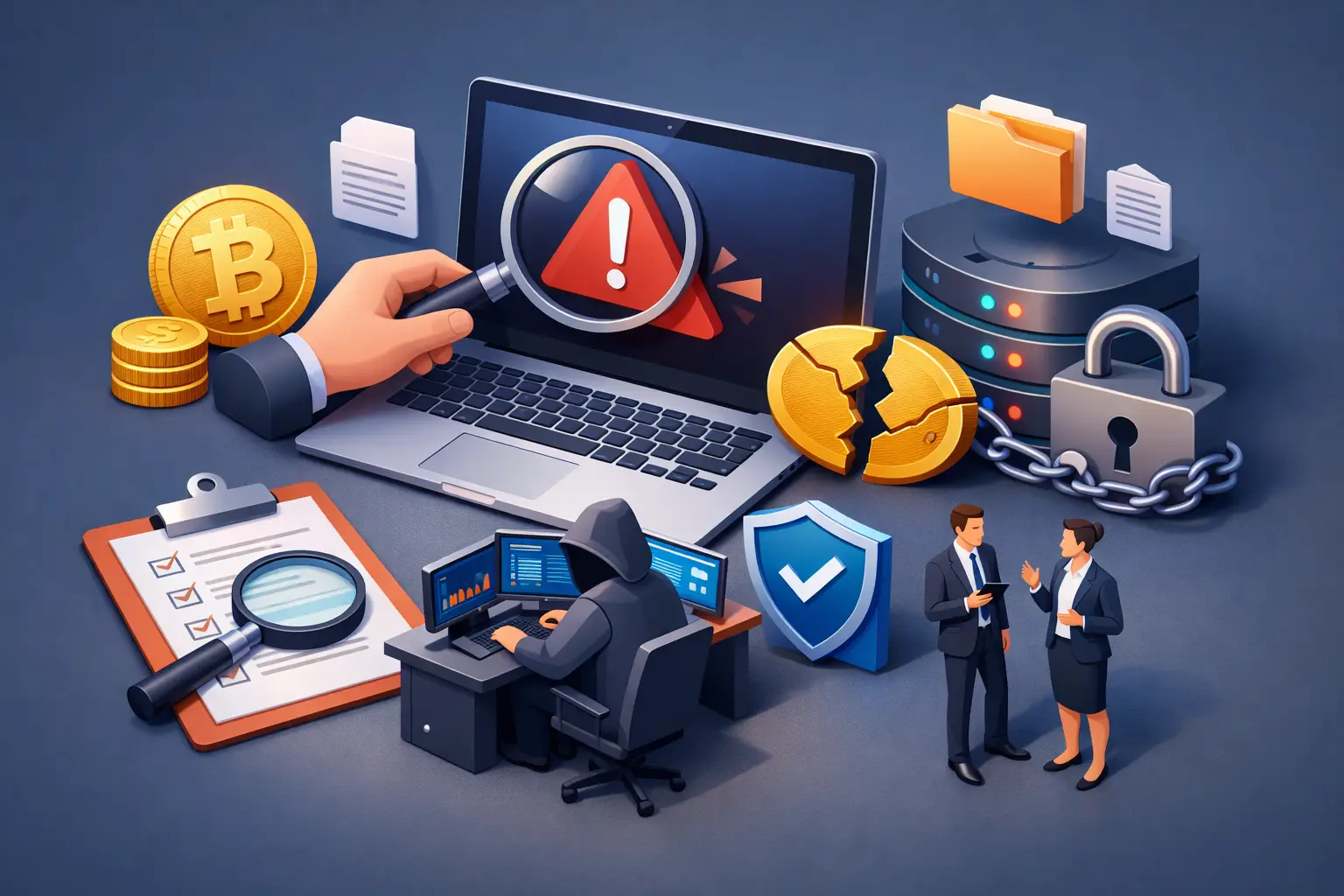
When crypto fraud is discovered, the first few hours often determine whether evidence is preserved or lost. If you are trying to understand how to report crypto fraud, the priority is not to confront the scammer, send more funds, or pay a so-called recovery fee. The priority is to secure evidence, document the transaction path, and report the matter in a way that can support tracing, exchange inquiries, and legal action.
Crypto cases move differently from ordinary payment disputes. Wallets can be created instantly, funds can be split across chains or routed through swaps, and scam operators often push victims to keep communicating while they move assets. That means a weak or incomplete report can slow down the very steps needed to identify off-ramp points and preserve records before they disappear.
How to report crypto fraud without damaging your case
The biggest reporting mistake is acting emotionally before acting methodically. Victims often delete chats, close browser tabs, reset devices, or continue speaking with the fraudster in the hope of getting funds back. Each of those steps can compromise evidence.
Start by preserving the full record of what happened. Take screenshots of the website, account dashboard, wallet addresses, transaction IDs, email headers, chat logs, payment confirmations, and any promises made by the operator. If the fraud involved a fake trading platform, record the displayed balances, withdrawal errors, account manager names, and any demands for tax, verification, or release payments. Those details matter because they help distinguish a genuine loss event from a private dispute and can reveal linked entities or repeated scam patterns.
At the same time, stop further transfers. If your wallet, exchange account, email account, or device may be compromised, change credentials immediately, enable stronger authentication, and review connected applications or approval permissions. In phishing and wallet-drain cases, reporting is only part of the response. Containment is equally urgent.
What to collect before you file a report
A useful crypto fraud report is evidence-led. General statements such as "I was scammed" rarely give law enforcement, exchanges, or compliance teams enough to act on. A stronger report identifies who interacted with you, what wallet addresses were involved, when transfers occurred, how the scam was presented, and where the assets appear to have moved.
You should gather the victim wallet address, destination wallet address, transaction hash for each payment, token type, amount, date and time, and the blockchain used. Also retain all communications with the suspected fraudster, including usernames, phone numbers, emails, domain names, social media profiles, and payment instructions. If funds were first sent to a legitimate exchange before being withdrawn to the scam wallet, preserve that account history too. It can help establish source of funds and support later compliance requests.
There is a practical point here that many victims miss. Screenshots alone are not always enough. Whenever possible, preserve original files, native exports, PDFs of account records, and raw message data. If a case proceeds to civil recovery, criminal reporting, or exchange escalation, the quality and integrity of the evidence can affect how seriously the file is treated.
Where to report crypto fraud
If you are asking how to report crypto fraud, the answer is usually not a single agency. Most legitimate cases require parallel reporting across several channels because each party controls a different piece of the response.
First, report the matter to your local law enforcement authority or cybercrime reporting channel. This creates an official incident record. In the United States, that may include local police, state-level consumer or financial enforcement bodies, and federal reporting routes depending on the facts. For business victims or higher-value losses, counsel may also want to prepare a more structured evidentiary package rather than relying only on a short online complaint form.
Second, report the receiving wallet addresses and transaction details to any exchange that may have received the funds at an off-ramp stage. Exchanges will not freeze assets simply because a victim asks them to, but they may log the complaint, review the wallet exposure, and respond to formal law enforcement or legal process. Timing matters. If the funds have not yet fully dispersed or been converted, early notification can still be valuable.
Third, notify your bank, card issuer, or payment provider if fiat was used at any stage. This is especially relevant where the fraud involved card payments, bank transfers to shell entities, or the purchase of crypto through an exchange under false pretenses. Even where a chargeback is unlikely, the payment trail can become part of the case chronology.
Fourth, if the scam involved impersonation, a fake app, or a cloned investment site, report the website, account, or app listing through the relevant platform. Takedown does not recover funds, but it can preserve records and limit further victimization.
How to write a report that investigators can use
A strong report is chronological, specific, and restrained. Do not exaggerate, speculate, or insert assumptions that you cannot support. State what happened, in what order, through which accounts, and with which transaction references.
Begin with a short timeline: when contact started, what was promised, when your first payment was made, what platform or wallet was used, and what happened when you tried to withdraw or stop the transaction. Then attach a transaction schedule showing each hash, amount, asset, sending address, receiving address, and chain.
Describe the fraud model clearly. Was it an investment scam, wallet compromise, phishing event, romance scam, OTC deal fraud, fake broker scheme, or unauthorized access incident? This matters because different fraud types generate different investigative leads. A fake investment platform may require domain, hosting, and exchange tracing. A wallet-drain event may require approval analysis, device review, and timing correlation.
If you do not know where the funds went after the first receiving address, say so. That is not a weakness. It is often the point where forensic blockchain analysis becomes necessary.
When professional tracing becomes necessary
Not every loss needs the same response. A small unauthorized transfer from a compromised wallet may be straightforward to document but difficult to recover if it moved quickly through multiple hops. A six-figure investment scam involving exchange deposits, stablecoin transfers, and repeated off-ramp patterns may justify a formal tracing program and legal coordination.
Professional tracing is usually warranted when the value is material, multiple transactions occurred, funds crossed exchanges or chains, or legal counsel needs evidence-grade reporting. In those cases, blockchain analytics can help map the movement of funds, identify service exposures, and produce documentation suitable for exchange liaison, complaints, civil proceedings, or law enforcement engagement.
This is also where victims are most vulnerable to secondary scams. Fraud victims are frequently approached by "recovery agents" who promise guaranteed returns, insider access, or instant wallet reversals in exchange for upfront fees. Legitimate forensic and recovery support does not require your private keys, does not take custody of your crypto, and does not ask you to pay a release charge to unlock recovered assets. If a supposed recovery company wants wallet access rather than evidence, that is a warning sign.
Common reporting mistakes that reduce recovery options
Delay is the most common problem, but it is not the only one. Victims often send an extra payment because the platform claims it is needed for tax clearance, compliance verification, or withdrawal activation. That usually increases the loss and strengthens the scammer's leverage.
Another issue is fragmented reporting. One version is told to the police, a different version to the bank, and an incomplete version to an exchange. Inconsistencies create confusion and can weaken credibility. Your facts should remain aligned across all reports, even if the level of detail differs by recipient.
There is also a tendency to focus only on the visible scam wallet. That can be too narrow. In many cases, the meaningful lead is not the first hop but the later consolidation address, swap service, or exchange deposit point. This is why clean recordkeeping matters even when the blockchain trail looks chaotic.
A practical standard for how to report crypto fraud
If you need a simple standard, think in four parts: preserve, contain, report, trace. Preserve the evidence before it disappears. Contain any ongoing compromise by securing accounts and devices. Report the incident to the relevant authorities, exchanges, and payment providers with a consistent factual record. Then assess whether tracing support is justified based on value, complexity, and the likelihood that actionable exposure exists.
For victims in complex cross-border matters, or where funds likely touched regulated service providers, a forensic partner such as AssetTrace can help turn raw blockchain activity into structured documentation that external parties can actually work with. That distinction matters. Raw wallet screenshots may describe a loss. A disciplined evidentiary file can support action.
The right report will not guarantee recovery. No honest professional should suggest otherwise. What it does is preserve your options, protect you from making the case worse, and give legitimate investigators something usable to work from when time matters most.
¿Ha perdido cripto por una estafa o un robo?
Comience con una revisión gratuita y confidencial. Le diremos con honestidad si un rastreo puede ayudar; la recuperación nunca está garantizada.