
Recovery & forensics insights
Plain-English guidance on tracing stolen crypto, spotting recovery-room scams, and what realistic asset recovery looks like across Europe.
Rastreo Forense de Wallets Cripto: Cómo Seguimos el Rastro del Dinero Robado
Cuando te roban criptomonedas, los fondos no desaparecen: dejan una huella inmutable. Descubre exactamente cómo los investigadores forenses siguen ese rastro, incluso a través de mixers y exchanges sin KYC.
Estafa de Trading y Brokers CFD Falsos: Señales de Alerta y Qué Hacer si Ya Invertiste
Los brokers CFD y forex fraudulentos siguen un guion predecible: ganancias infladas, presión para invertir más y bloqueo de retiradas. Aprende a reconocer el patrón y actuar con documentación forense antes de perder definitivamente tu dinero.
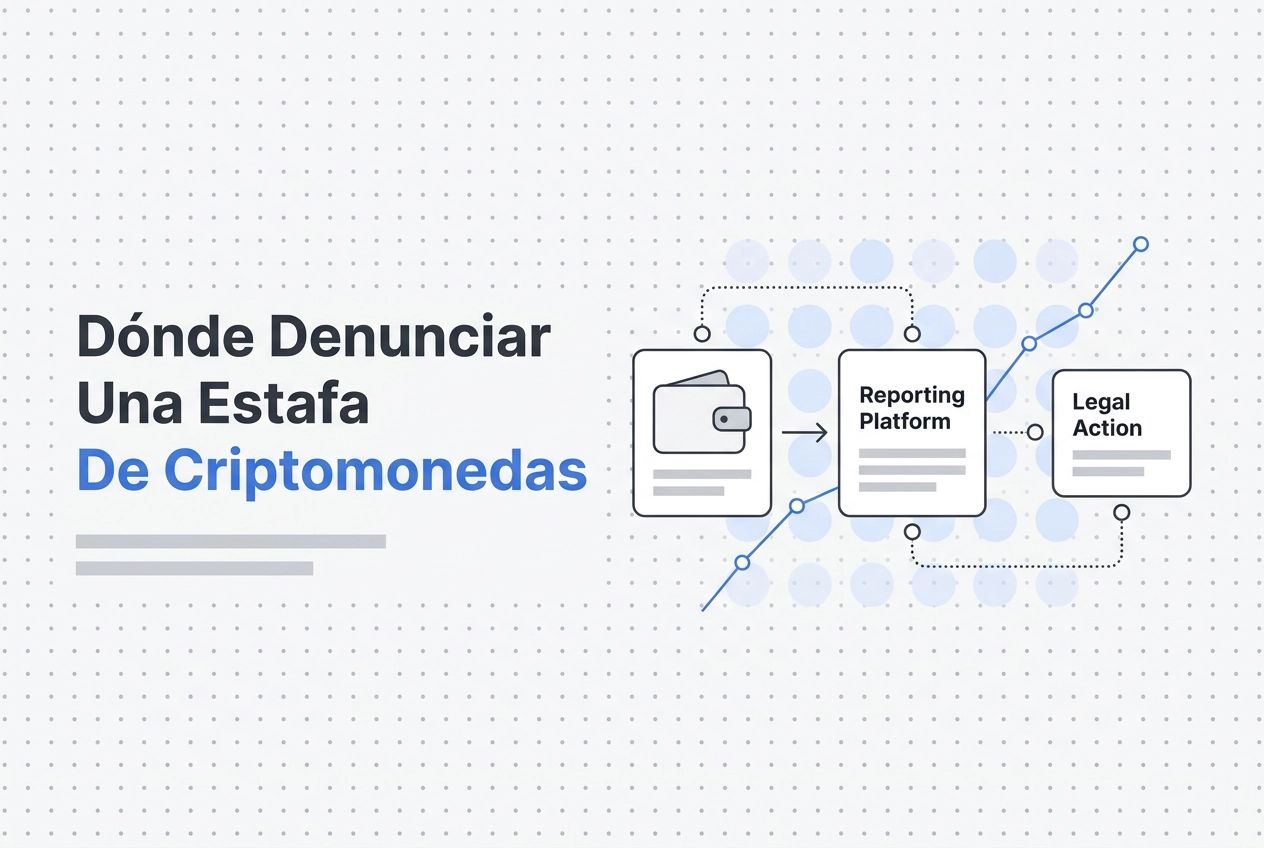
Dónde denunciar una estafa de criptomonedas: guía para víctimas
Si has sido víctima de un fraude con criptomonedas, cada hora cuenta. Esta guía te explica paso a paso qué hacer primero, cómo preservar la evidencia y ante qué organismos denunciar en España, la UE y a nivel internacional.
Qué es un Informe Pericial Blockchain y Por Qué lo Exigen los Juzgados Españoles
Un informe pericial blockchain no es un simple listado de transacciones. Descubre qué estructura jurídica exigen los juzgados españoles para admitirlo como prueba válida y qué debe pedirle exactamente a un perito forense.
What to Do After a Crypto Scam: 8-Step Checklist
Just been scammed out of crypto? A clear, numbered action plan for the first 24 hours — what to do, what to keep, who to tell, and what to avoid.
How Blockchain Forensics Works (Plain English)
How investigators trace stolen crypto: address clustering, attribution, chain of custody, and court-admissible reports — explained without the jargon.
Can stolen crypto be traced? What's realistic
Most stolen crypto can be traced on public blockchains. What tracing can and can't do, what stops it, and why tracing isn't the same as recovery.
How to Spot a Crypto Recovery-Room Scam
Recovery-room scams target people who already lost crypto. The warning signs that an offer of help is itself a fraud — and how a real firm behaves.
MiCA and Crypto Asset Recovery, Explained
What MiCA and the EU Travel Rule mean for fraud victims — why a forensic firm is not a CASP, and how the rules can support a trace and a freeze.
Is Crypto Recovery Actually Possible? Honest Answer
An honest look at when stolen crypto can be recovered and when it cannot — what affects the odds, and why no legitimate firm guarantees a result.
How to Report Crypto Fraud in the EU (2026 Guide)
Lost crypto to a scam? The first steps to take, what evidence to keep, and which authority to report to in Spain, Germany, France and across the EU.
Think you've lost crypto to a scam?
Start with a free, no-obligation case review — a senior investigator will tell you honestly whether your case is worth pursuing, before you spend anything. The first 72 hours matter most.