
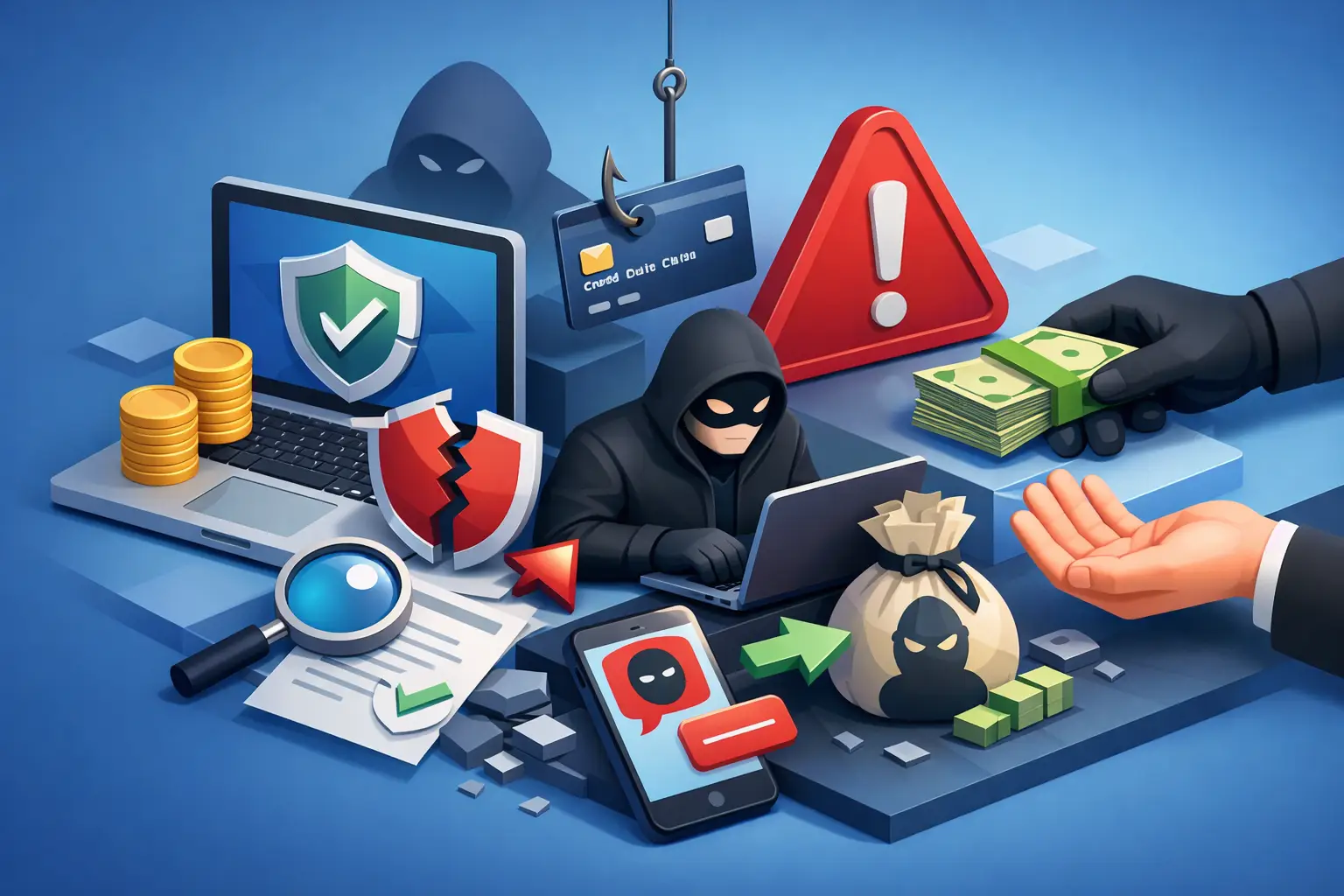
A recovery offer can arrive when a victim is at their most vulnerable: after a wallet drain, a fake investment platform collapse, or months of unanswered messages from a supposed broker. That timing is deliberate. The top signs of recovery fraud often appear in messages that promise certainty, speed, and access to funds that a legitimate investigator cannot honestly guarantee.
Recovery-room fraud is a second-stage crime. Its operators use stolen case details, impersonate law firms or blockchain investigators, and exploit a victim's understandable desire to act immediately. A credible recovery process begins with evidence preservation, wallet analysis, and a clear assessment of what can and cannot be done. It does not begin with a demand for secrets, rushed payments, or claims that a stranger has already recovered your assets.
Why recovery fraud is so convincing
Crypto transactions are visible on public blockchains, but visibility is not the same as control. A scammer can show a victim a transaction hash, identify a destination wallet, or describe an exchange withdrawal and make it sound as though the assets are ready for release. In reality, tracing funds and converting that intelligence into a recovery action may require attribution work, evidence documentation, exchange liaison, legal process, and coordination across jurisdictions.
Fraudsters exploit the gap between those two ideas. They present basic blockchain information as proof of access. They may also know the name of the original scam, the wallet address used, or the amount lost because victims have posted details publicly or submitted them to dubious complaint sites. Specific knowledge of your case is not proof of authority.
Top signs of recovery fraud
They ask for a private key, seed phrase, or wallet connection
No legitimate forensic provider needs your seed phrase or private keys to trace transactions. Those credentials provide direct control over a wallet. Once disclosed, they can be used to empty any remaining assets or to compromise wallets restored later from the same phrase.
The same caution applies to wallet-connection requests. A recovery operator may tell you to connect a wallet to "verify ownership," then send an approval request that permits token transfers. Never sign a transaction or approval you do not fully understand. Screenshots, public wallet addresses, transaction IDs, exchange correspondence, and a written timeline are normally sufficient to begin a case review.
They guarantee recovery or claim the funds are already secured
Blockchain tracing can identify transaction paths and potential off-ramps. It cannot guarantee that assets remain available, that an exchange will freeze them, or that a legal authority will take action. Outcomes depend on timing, jurisdiction, evidentiary quality, platform cooperation, asset movement, and the facts of the underlying fraud.
Be wary of statements such as "we have located your funds and only need a final payment" or "our team has recovered 100% of your crypto." A serious firm explains the distinction between tracing, attribution, reporting, recovery coordination, and actual asset return. It should state the limits of its role rather than turn uncertainty into a sales promise.
They demand a release fee, tax, insurance payment, or blockchain activation charge
Invented fees are a defining feature of recovery fraud. The stated reason varies: anti-money-laundering clearance, wallet synchronization, smart-contract activation, government tax, gas, insurance, or an exchange release code. The pressure remains the same: pay now or lose access to recovered funds.
A professional provider should give a written explanation of its services, scope, deliverables, pricing structure, and payment terms. Fees for genuine investigative work may exist, particularly where specialist tracing and evidence preparation are required. But a payment demand supposedly needed to "unlock" funds held by an unknown recovery agent is a major warning sign. Do not send crypto to a personal wallet or payment address merely because someone says it will trigger release.
They impersonate authorities, lawyers, exchanges, or forensic firms
Recovery scammers commonly adopt names and visual identities resembling regulators, law enforcement bodies, exchanges, legal practices, or established investigation companies. They may send forged letters, case numbers, certificates, or screenshots of official-looking dashboards. Some use spoofed email addresses or cloned websites with minor spelling changes.
Verify identity independently. Do not use phone numbers, links, or messaging accounts provided in the unsolicited approach. Find the organization's official contact route yourself, then ask whether the person, case number, and communication are genuine. For legal representatives, confirm the attorney's licensing status through the appropriate public register. A document with a logo is evidence of nothing until its source is verified.
They contact you first through social media or an encrypted chat app
Unsolicited contact is not automatically fraudulent, but it materially increases risk, especially when the person says they found your case online and can recover it quickly. Telegram, WhatsApp, Instagram, Facebook, and X are heavily used by recovery-room operators because accounts can be replaced easily and conversations are difficult to authenticate.
Treat testimonials in these channels with caution. Fraud rings create fake victim profiles, scripted success stories, and group chats where supposed clients praise the operator. A video call, badge, or profile photo does not establish professional standing. Ask for verifiable business details, a written engagement process, and documentation that can be checked outside the chat.
They rush you to act before you can verify anything
Urgency is a control tactic. You may be told that a wallet will close in an hour, an exchange freeze expires today, or a court order must be funded immediately. These claims are designed to prevent independent verification and to keep you focused on the next payment.
Real preservation issues can be time-sensitive. For example, an exchange may need prompt notice when stolen funds reach its platform. That does not justify bypassing due diligence. A credible investigator can explain the urgency, identify the evidence needed, and document the proposed action without demanding blind trust or immediate access to your accounts.
They refuse to define the work product
Ask a direct question: What exactly will I receive? If the answer is vague - "our experts will handle everything" - step back. A legitimate forensic engagement should define the case scope and expected deliverables. Depending on the matter, these may include a transaction chronology, wallet-cluster analysis, tracing methodology, evidentiary exhibits, source references, an investigative report, or materials suitable for counsel, an exchange compliance team, or law enforcement.
The provider should also explain what it does not do. It should not claim authority it lacks, promise cooperation from third parties, or suggest it can reverse confirmed blockchain transactions. Clear boundaries are a sign of professional discipline, not a lack of capability.
How to protect a case after a suspicious recovery offer
First, stop communicating if the person has requested credentials, payment, remote access, or a wallet signature. Preserve the conversation instead of deleting it. Save usernames, email headers, payment addresses, transaction hashes, websites, invoices, screenshots, voice messages, and any documents sent to you. Record dates, amounts, and the names used by the operator.
Next, do not move remaining assets based on the scammer's instructions. If you believe a wallet is compromised, use a clean device and seek qualified technical guidance before transferring assets. Changing passwords and enabling strong multi-factor authentication on email and exchange accounts may also be necessary, particularly if the original fraud involved phishing or remote-access software.
Then separate evidence from speculation. A useful case file usually includes your public wallet addresses, transaction IDs, exchange account records, communication with the original scam, payment receipts, and a concise chronological narrative. This gives a qualified investigator a reliable starting point and reduces the chance that a recovery-room scammer can manipulate gaps in your understanding.
What a legitimate recovery pathway looks like
A credible process is methodical. It begins with an intake review to establish the loss event, available evidence, relevant blockchain networks, and immediate preservation steps. The forensic phase maps transaction flows, identifies patterns and possible exposure to regulated platforms, and documents methodology and findings. If the evidence supports further action, the work may continue through legal counsel, exchange compliance channels, or appropriate reporting routes.
AssetTrace follows a non-custodial, evidence-first model: clients retain control of their assets, and investigators do not require private keys or seed phrases. That separation matters. The party analyzing a case should not need the ability to move a client's funds.
Before retaining any provider, ask how your data will be handled, what report or documentation you will receive, what fees apply, and which outcomes remain outside the provider's control. A careful answer may feel less reassuring than a guarantee, but it is far more valuable when your evidence, privacy, and remaining assets are at stake.
If a recovery offer makes you feel pressured, flattered, or afraid to pause, pause anyway. Preserving control of your accounts and evidence is often the first meaningful recovery step.
Lost crypto to a scam or theft?
Start with a free, confidential review. We'll tell you honestly whether a trace can help — recovery is never guaranteed.