
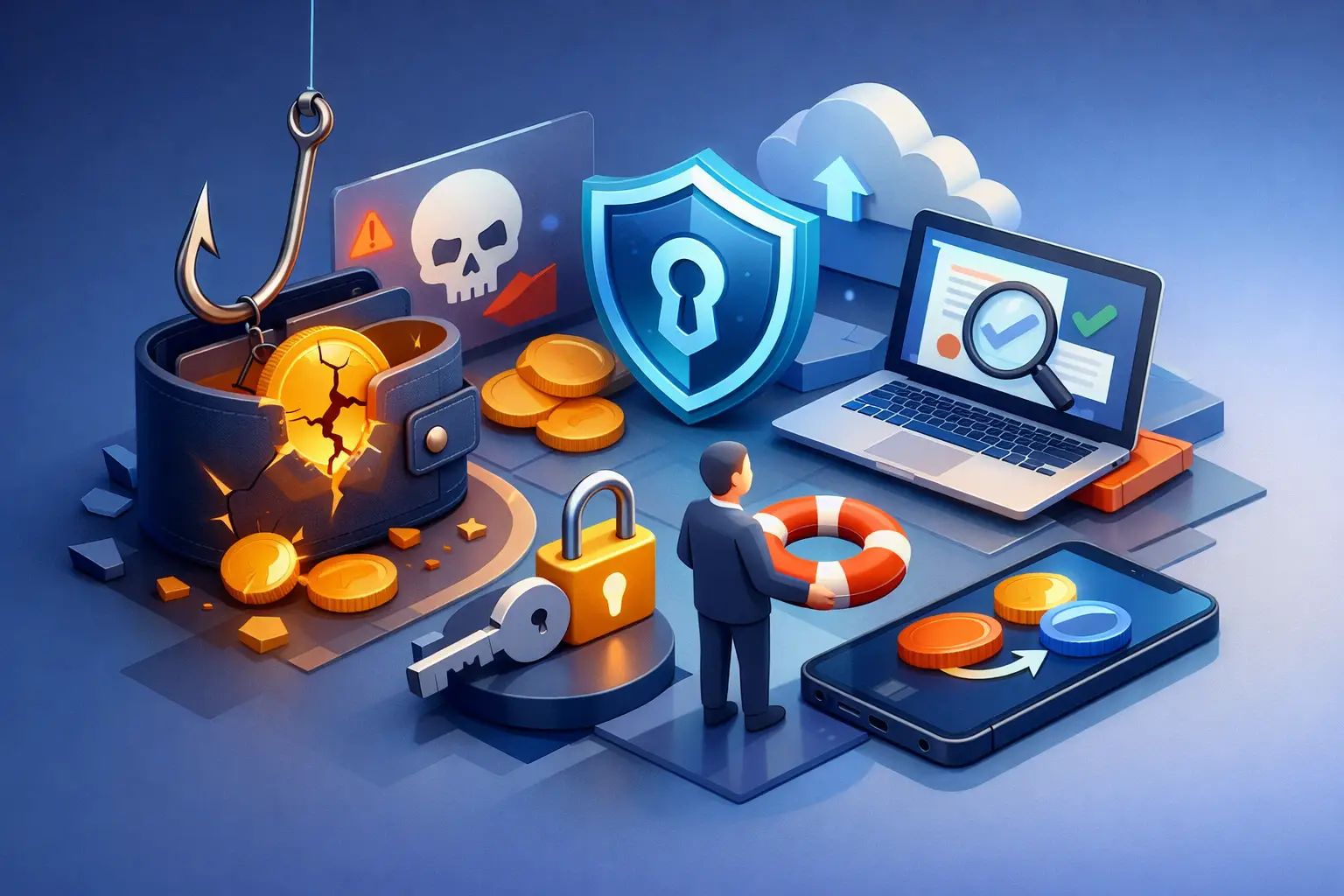
A wallet drain can unfold in minutes: a convincing token claim, a fake support page, or a malicious signing request is approved, and assets begin moving through fresh wallets, bridges, and exchanges. Phishing wallet drain recovery is therefore not a matter of reversing a transaction. It is a time-sensitive forensic and recovery process that begins with containment, evidence preservation, and a clear record of what occurred.
The first objective is to prevent additional loss without destroying the evidence needed to trace the assets. The second is to turn a confusing sequence of wallet transactions into documentation that an exchange, law enforcement agency, legal counsel, or compliance team can act on.
What a wallet drainer may have access to
Not every phishing event creates the same level of exposure. A victim may have approved a malicious transaction that transferred one token, connected a wallet to an untrusted application, granted an unlimited token allowance, or disclosed the wallet's recovery phrase. These events require different containment measures.
A malicious approval can permit a drainer to transfer specific assets later, sometimes repeatedly. A compromised recovery phrase or private key is more serious: the attacker may control the wallet indefinitely and can use automated sweepers to capture any future deposits. If the phrase was exposed, the affected wallet should be treated as permanently compromised, even if it appears quiet after the initial theft.
There is also a difference between a visible on-chain drain and a failed signing attempt. If no transaction was executed, no approval was granted, and no credentials were disclosed, the response may be limited to disconnecting the site and reviewing activity. A proper assessment should establish which event actually took place before anyone pays for unnecessary services or takes actions that increase risk.
Phishing wallet drain recovery begins with containment
Do not continue communicating with the phishing site, supposed broker, or person who sent the link. Do not sign additional transactions in the hope of "verifying" ownership or releasing frozen funds. Those requests often create a second loss.
Use a clean device and a trusted network to document the incident. If you suspect a seed phrase or private key compromise, create a new wallet using a secure process and do not reuse the compromised credentials. If assets remain in the old wallet, moving them may be appropriate, but a specialist should first assess whether an automated sweeper is likely to intercept the transaction.
The immediate record should include:
- Wallet addresses involved, including the sending wallet and every known destination address
- Transaction hashes, network names, dates, times, token amounts, and approximate dollar values
- Screenshots of the phishing page, messages, advertisements, emails, social-media accounts, and wallet prompts
- The URL, domain, application name, and any contact details used by the fraudster
- A timeline describing what you clicked, signed, sent, or disclosed, in chronological order
Capture the information as it appears. Do not edit screenshots, delete chat histories, or rely only on a block explorer page that may later be difficult to locate. Save original files where possible and record the device, account, and platform used. This creates a foundation for evidentiary review and helps distinguish facts from assumptions made during a stressful event.
Review approvals and active connections carefully
If the recovery phrase was not exposed, the next question is whether the wallet retains unsafe token approvals or connected application permissions. On account-based chains, a malicious approval may allow a third party to transfer tokens without another visible prompt from the owner. Revoking a suspicious approval can be necessary, but it is still an on-chain transaction and should be performed only through a trusted wallet interface after the incident has been documented.
For wallets that held multiple assets across several networks, the review must cover each relevant chain. Drainers frequently target stablecoins and high-liquidity tokens first, then move to NFTs, wrapped assets, or tokens held on secondary networks. An apparent single-token theft may not be the full scope of the compromise.
Preserve evidence before the trail becomes harder to explain
Blockchain transactions are public, but public data alone is not a recovery file. A useful case record connects on-chain activity to the phishing mechanism, the victim's ownership of the source wallet, the timing of the loss, and the path of the stolen assets after the first transfer.
This distinction matters when approaching a centralized exchange or pursuing legal action. An exchange may need precise transaction identifiers, attribution analysis, and a well-defined request before it can assess whether a destination account is within its control. Counsel may need a structured chronology and a record showing how conclusions were reached. Law enforcement may need a report that identifies the likely service providers and jurisdictions associated with the cash-out path.
Maintain a separate incident log. Record every report made, ticket number received, person contacted, and response given. If a bank card, email account, mobile number, or exchange account was also involved, preserve those records as well. The phishing operation may have created exposure beyond the self-custody wallet.
How forensic tracing supports recovery action
A forensic trace begins by confirming the theft transaction and following subsequent movement across the blockchain. Investigators examine whether assets were consolidated, swapped into other tokens, bridged to another network, sent through a mixing service, or deposited into a known exchange, payment provider, or over-the-counter service.
The goal is not to promise that every transaction can be recovered. The goal is to identify actionable points in the flow of funds and support them with a defensible evidentiary record. Speed matters because a trace may reveal a deposit address before funds are withdrawn, converted, or dispersed further.
Attribution requires more than a wallet label
An address can be associated with a service through transaction patterns, clustering analysis, known infrastructure, and verified intelligence. That association should be expressed carefully. A wallet receiving stolen funds is not automatically the thief's personal wallet, and a deposit address may be controlled by an exchange on behalf of an unidentified customer.
A credible forensic report distinguishes observed facts from analytical conclusions. It identifies source data, transaction paths, timestamps, asset conversions, and confidence levels. This approach is particularly valuable where a matter crosses multiple networks or jurisdictions, because the report must remain understandable to parties who do not work with blockchain data every day.
Exchange and legal coordination depend on the evidence
When stolen assets reach a regulated service, the appropriate next step may include a preservation request, fraud report, compliance referral, or legal process. The exact route depends on the service's policies, the jurisdiction, the amount at issue, and whether there is a live opportunity to restrict withdrawal.
Forensic investigators do not replace law enforcement or the courts. They provide the transaction analysis and evidence package that can make external action more specific and more efficient. AssetTrace operates on this evidence-first basis, coordinating tracing, reporting, and recovery pathways without taking custody of client funds or requesting private keys.
What recovery can and cannot achieve
Recovery prospects depend on where the assets traveled, how quickly the incident was reported, the quality of available evidence, and whether an identifiable service provider can be engaged before funds move again. A rapid deposit to an exchange can create an actionable opportunity. Assets that have been repeatedly swapped, bridged, mixed, or withdrawn into private wallets may require a longer and more complex investigation.
No legitimate firm can guarantee a result before reviewing the case. Blockchain visibility does not mean immediate control over the assets, and a trace cannot by itself compel an exchange to release funds or identify an account holder. Recovery frequently involves compliance teams, legal counsel, law enforcement, and procedures that vary by location.
That reality is not a reason to delay. It is a reason to work methodically. Even when an immediate freeze is unavailable, a documented trace can preserve options for later reporting, civil action, or a coordinated response if the assets reach a regulated off-ramp.
Avoid the second scam
Phishing victims are often targeted again by fake recovery agents. They may claim to have already located the funds, demand a release fee, ask for a seed phrase, or insist that a payment is needed to activate a smart-contract recovery tool. These are serious warning signs.
A legitimate forensic provider should explain its scope, deliverables, pricing, and limitations before work begins. It should never need your private key, recovery phrase, or control of your wallet to investigate a theft. It should also avoid claims that it can "hack back" funds or force a blockchain transaction to reverse.
If you are contacted unexpectedly by someone offering recovery, verify the organization independently and keep the communication as evidence. The fraudster may be using information from the original incident to make the approach seem credible.
Bring the right file to the first review
A professional case review is most productive when it starts with the wallet address, transaction hashes, incident timeline, and preserved phishing materials. If you have already filed reports with an exchange, platform, bank, or police agency, include those reference numbers. Do not send recovery phrases or private keys to anyone.
The strongest next step is usually a calm, documented one: secure what remains, preserve what happened, and establish where the assets went before the trail becomes more fragmented. That discipline protects both your evidence and your remaining digital assets.
Lost crypto to a scam or theft?
Start with a free, confidential review. We'll tell you honestly whether a trace can help — recovery is never guaranteed.