
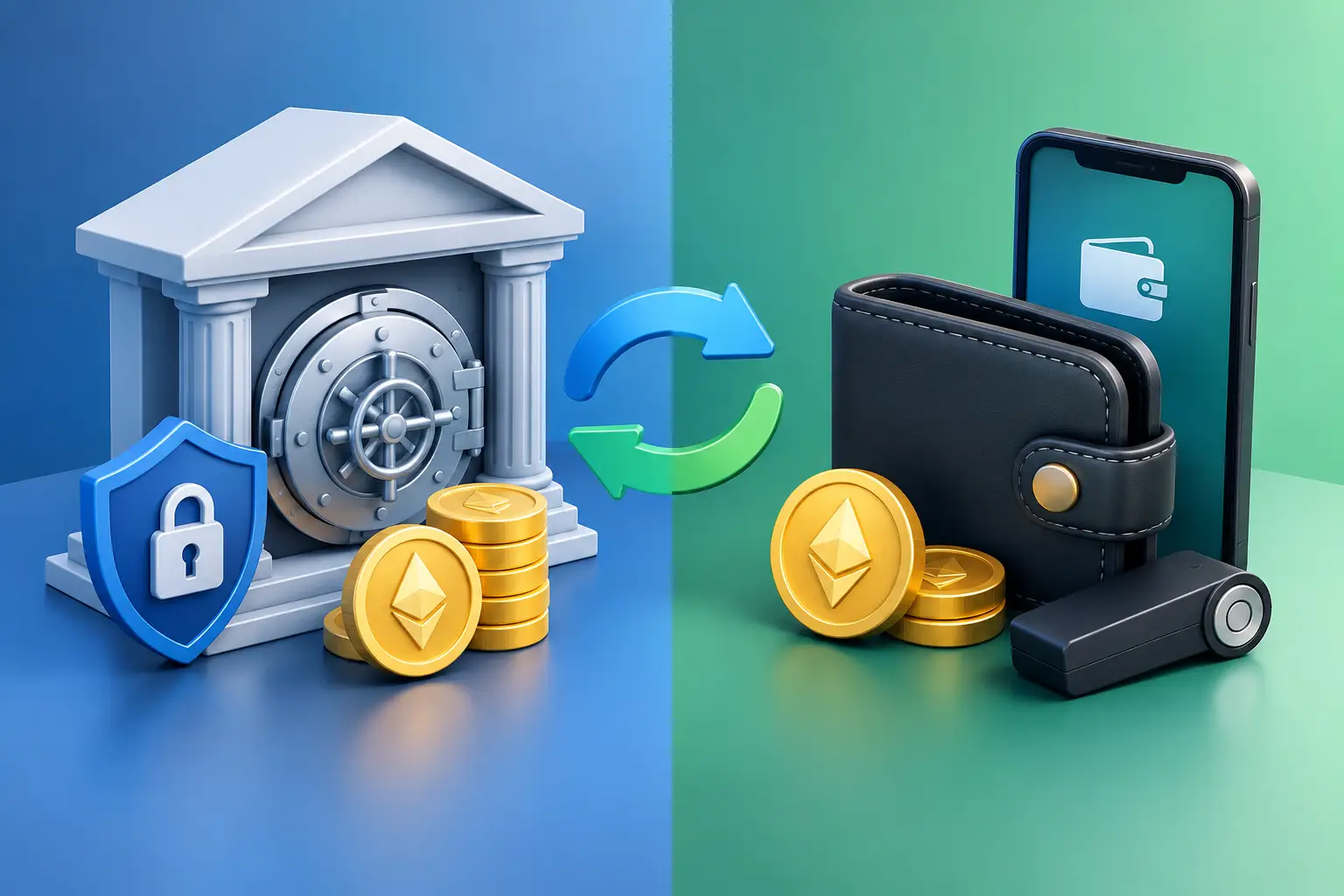
A recovery operator asks for your seed phrase so they can "secure" the cryptocurrency that was stolen from you. Or they tell you recovered funds must first be sent to their wallet for verification. At that moment, the distinction between custodial versus noncustodial recovery services stops being technical language and becomes a critical security decision.
For victims of crypto fraud, the pressure to act is intense. A phishing drain, fake investment platform, romance scam, or compromised wallet can create a false sense that anyone promising fast recovery should be trusted. Secondary scammers understand this. They frequently present custody as an operational necessity, then use access to take whatever assets remain.
A legitimate recovery process should be assessed not only by its claims of tracing capability, but by who controls assets, credentials, evidence, and next steps.
What custodial recovery services mean
A custodial recovery provider takes possession or control of a client's digital assets at some point in the engagement. This may involve asking the client to transfer cryptocurrency to a wallet controlled by the provider, using a provider-managed account, or surrendering credentials that enable the provider to move funds.
Custody is not automatically unlawful or fraudulent. In regulated financial and legal settings, custody may be performed under a defined mandate, with contractual authority, identity verification, segregation of client assets, compliance controls, and clear accountability. For example, a court-appointed receiver, a regulated custodian, or an exchange acting under a legal preservation order may have a legitimate role in holding or restricting assets.
The issue is whether custody is necessary, authorized, and protected by a verifiable framework. A recovery business that simply asks a fraud victim to send funds to an unfamiliar wallet is not providing the safeguards associated with formal custody. It may instead be creating another opportunity for loss.
Custodial arrangements introduce practical risks. The provider becomes a counterparty with access to the assets. The client must evaluate its legal status, wallet controls, insurance or asset-protection arrangements where applicable, jurisdiction, recordkeeping, withdrawal procedures, and what happens if the business becomes unresponsive. If those questions cannot be answered clearly, the custody request should be treated as a serious warning sign.
How noncustodial recovery services work
A noncustodial recovery firm does not take possession of client funds and does not require private keys, seed phrases, exchange passwords, or two-factor authentication codes. Its role is investigative and coordinative rather than asset-holding.
The work begins with available evidence: transaction hashes, wallet addresses, exchange records, screenshots, communications with the fraudster, payment receipts, device details, and a timeline of events. Analysts trace asset movements across the blockchain, identify clustering patterns and potential exchange exposure, document attribution indicators, and preserve findings in a structured report.
Where a trace reaches a compliant exchange, payment provider, or identifiable service, the next step is usually formal escalation. Depending on the facts and jurisdiction, that can include exchange notifications, law-enforcement reports, counsel-led preservation requests, civil litigation support, or Financial Intelligence Unit-aligned reporting. The recovery firm helps organize technical evidence so that the appropriate institution can assess it.
This model recognizes a difficult but necessary truth: a forensic firm cannot simply reverse an on-chain transaction. Blockchain transfers are generally irreversible. Recovery depends on locating assets, identifying a viable intervention point, and using evidence through the proper legal, compliance, or platform channels.
Custodial versus noncustodial recovery services: the practical difference
The central difference is control. A custodial provider may be able to move or hold assets. A noncustodial provider investigates, documents, and supports action without gaining the ability to move a client's cryptocurrency.
For a victim whose wallet has already been compromised, this difference is especially significant. Handing over a seed phrase does not grant limited access. It grants complete control over every asset derived from that wallet. No legitimate investigator needs a seed phrase to trace public blockchain activity. A wallet address and transaction data are sufficient for tracing work.
Similarly, a legitimate firm does not need a client to send remaining funds to a so-called recovery wallet before an investigation can begin. If a client still controls assets in a compromised environment, the appropriate response may be to secure the account or migrate funds independently to a new wallet under the client's control. That security action is separate from giving a recovery provider custody.
Noncustodial work also creates a cleaner evidentiary boundary. The investigator can document what occurred, explain methodology, retain relevant source material, and produce a report without becoming the holder or mover of disputed assets. For legal counsel, compliance teams, and affected businesses, that separation can reduce confusion around authority, chain of custody, and responsibility.
When custody may be appropriate
There are situations where assets must be held, frozen, or transferred under formal authority. A bankruptcy matter, court order, estate administration, regulated exchange proceeding, or law-enforcement seizure may require a qualified entity to exercise custody. These are exceptions governed by specific legal and operational controls, not standard steps in a private recovery pitch.
Before agreeing to any custodial arrangement, ask who is receiving control, under what legal authority, in which jurisdiction, and under what written terms. Confirm whether the entity is regulated or formally appointed for the role it claims to perform. Ask how assets are segregated, what records you will receive, and how you can independently verify the destination wallet or account.
Most importantly, distinguish between a request made by a recognized institution through a documented process and an unsolicited instruction from a recovery agent communicating through messaging apps. Professional appearance, copied company registration details, and polished reports do not establish authority.
Red flags that often signal recovery-room fraud
Recovery fraud commonly follows the first fraud. The operator may claim to have already located funds, demand a release fee, request remote access to a device, or insist that an urgent transfer is required before the opportunity disappears. The goal is usually not recovery. It is extracting more money, credentials, or identity documents from a person already under stress.
Be particularly cautious when a provider requests any of the following:
- A seed phrase, private key, exchange password, two-factor authentication code, or remote control of your device.
- A transfer of cryptocurrency to "activate," "verify," "insure," or "release" recovered funds.
- Payment in advance for supposed taxes, AML clearance, gas fees, or blockchain validation fees tied to funds they claim to control.
- Guarantees of recovery, especially before the wallet trail, counterparty exposure, and jurisdictional options have been investigated.
A credible firm can explain its scope in plain terms. It should identify what evidence it needs, what it can and cannot do, how findings will be documented, and what external parties may need to become involved. It should not manufacture urgency to obtain control over your assets.
What a defensible noncustodial engagement should provide
A professional noncustodial engagement is not merely a screenshot of transactions or a generic statement that funds were traced. It should follow a disciplined case pathway: intake and fact review, preservation of available records, blockchain analysis, identification of relevant service-provider exposure, and a written assessment of viable next steps.
The deliverable matters. A useful forensic report records the relevant wallet addresses and transaction hashes, explains the analytical methodology, presents the movement of funds in a clear chronology, identifies limitations, and separates confirmed facts from investigative indicators. Where appropriate, it can be prepared for use by legal counsel, exchanges, insurers, compliance teams, or law enforcement.
AssetTrace operates on this noncustodial principle: investigative support should not require possession of a client's funds or access to private keys. The objective is to convert fragmented technical data into evidence that can support proportionate recovery action.
Protect your position before you engage anyone
If the loss is recent, preserve evidence before chats disappear or accounts change. Save transaction IDs, wallet addresses, emails, messages, platform records, screenshots, and dates. Avoid interacting further with the suspected fraudster unless instructed by legal counsel or law enforcement, and do not install remote-access software at a recovery agent's request.
If you still hold assets and suspect wallet compromise, move deliberately. Secure your email and exchange accounts, change passwords from a trusted device, review authorized sessions, and seek qualified wallet-security guidance. Never disclose recovery phrases while trying to obtain help.
The strongest recovery path is rarely the person making the loudest promise. It is the process that preserves your control, documents the facts, and gives legal and compliance stakeholders evidence they can act on.
Lost crypto to a scam or theft?
Start with a free, confidential review. We'll tell you honestly whether a trace can help — recovery is never guaranteed.